 listicle
Are On-Site Fleet Maintenance Benefits Worth It?
Last Updated: October 26, 2026
Quick Summary
On-site fleet maintenance delivers its biggest benefits by eliminating deadhead miles, shop queues, and driver downtime, since service happens where your trucks already park. That keeps more vehicles available and avoids hidden costs like towing, lost driver hours, and missed deliveries that often dwarf the parts and labor line.
- On-site service brings tools, equipment, and parts to your yard, terminal, or jobsite.
- Build schedules around mileage intervals, time-based checks, seasonal inspections, and driver-reported issues.
- Keep major overhauls, structural repair, alignment, and warranty work at a shop.
- Give the provider your vehicle list, mileage, and known issues in advance for parts staging.
- Take unsafe vehicles out of service and move them to a shop; uptime never outranks safety.
Table of Contents
- Why On-Site Fleet Maintenance Beats the Shop Run
- The Core Benefits of On-Site Fleet Maintenance
- How Fleet Preventive Maintenance Protects Your Assets
- Building a Fleet Maintenance Schedule That Fits Your Routes
- Mobile Truck Maintenance vs. Traditional Shop Visits
- In-House vs. Outsourced Fleet Maintenance: Which Fits Your Operation?
- What to Check Before You Book a Mobile Fleet Service
- Get a Fleet Maintenance Quote from Ryan's Mobile Repair LLC
- Frequently Asked Questions
Why On-Site Fleet Maintenance Beats the Shop Run
The math is simple: every hour a truck sits in a shop, it isn't earning. That's the core case for the benefits of on-site fleet maintenance, and it's why fleet managers across Central Texas are rethinking the traditional shop run.
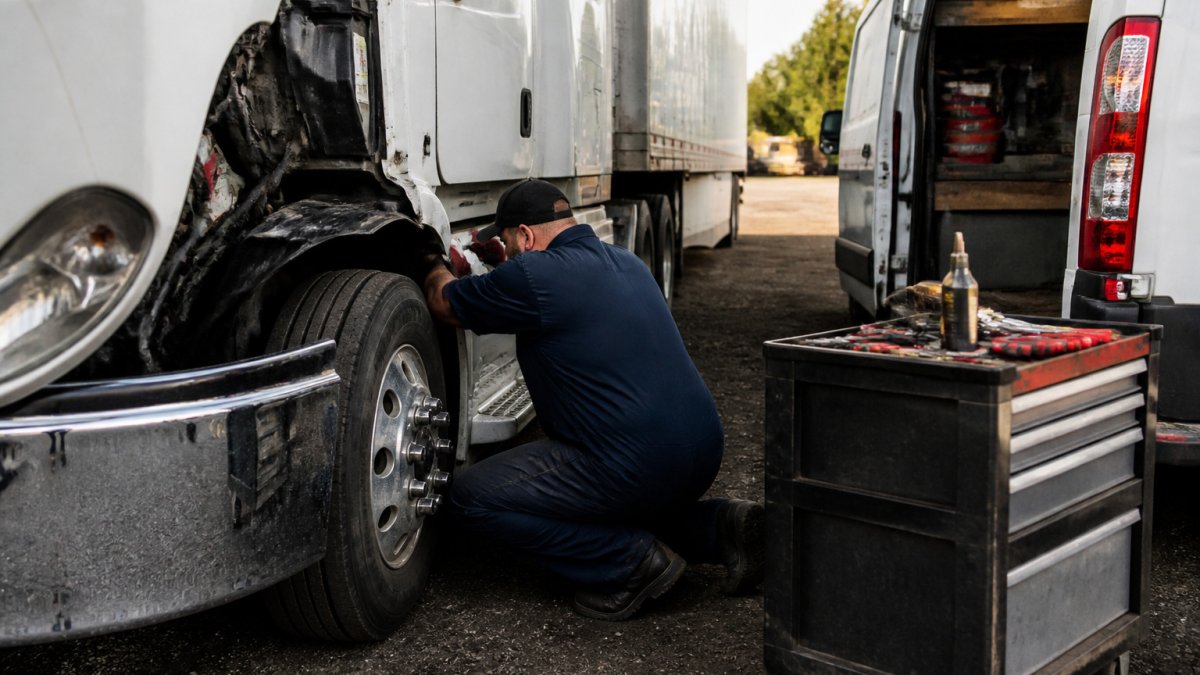
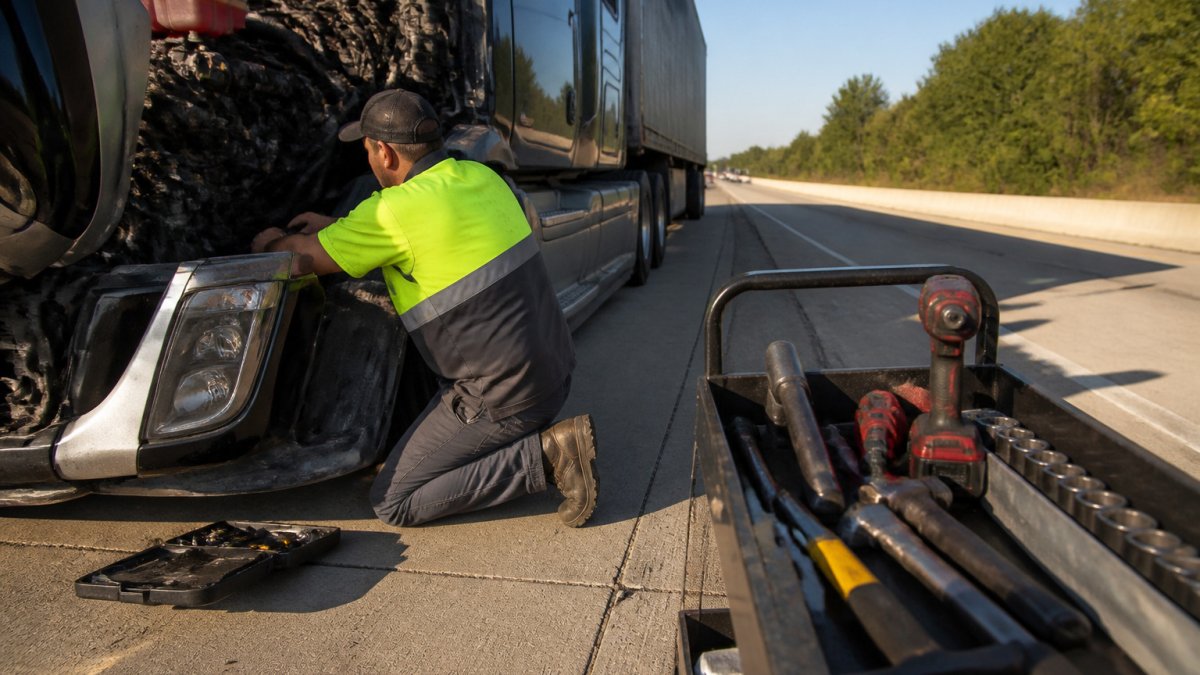
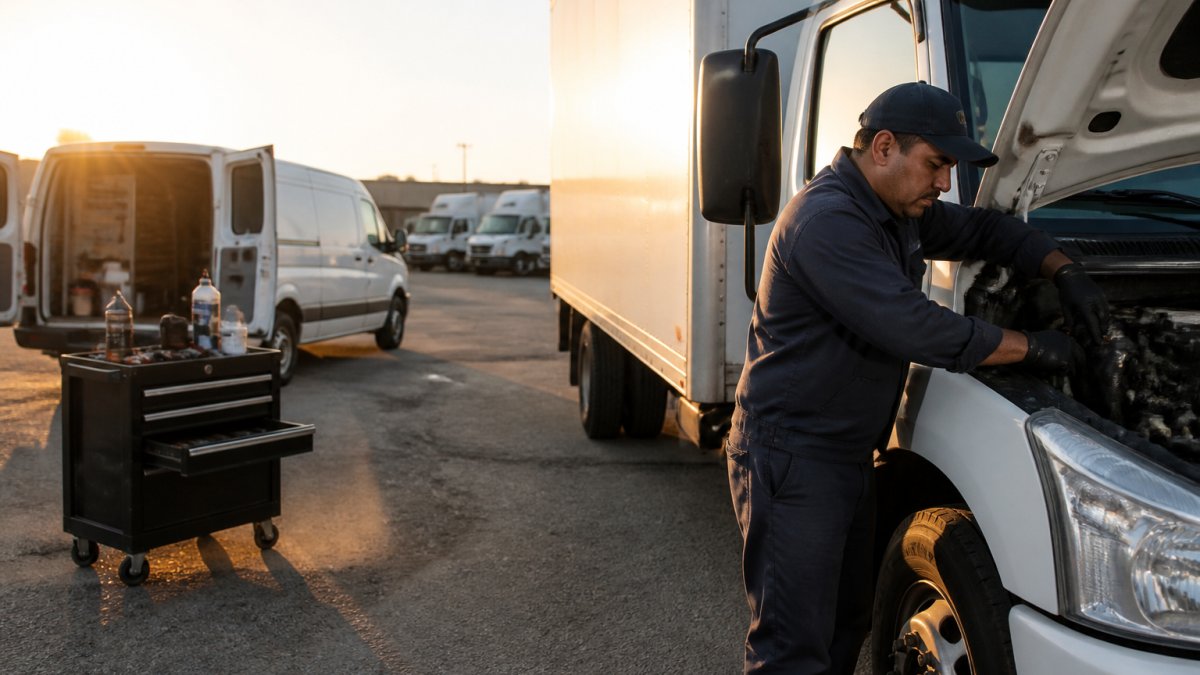
On-site fleet maintenance is a service model where a qualified mechanic brings the tools, equipment, and parts to your yard, terminal, or jobsite and performs scheduled service and repairs there. Instead of dispatching a driver to a shop, you bring the shop to the fleet.
The Core Benefits of On-Site Fleet Maintenance
The biggest wins come down to time and money. When service happens where your trucks already park, you eliminate the deadhead miles, the shop queue, and the driver downtime that quietly drain a fleet's productivity.
Less Vehicle Downtime and More Available Trucks
Vehicle downtime is the silent budget killer. A truck that's waiting for a bay at a shop is a truck that isn't delivering, and most fleets feel that loss long before they see it on an invoice. For concrete steps to cut that loss, see our guide on how to reduce fleet downtime.
Lower Repair Costs and Predictable Spending
Watch out: the hidden cost of a shop visit isn't the repair, it's everything around it. Towing, lost driver hours, and missed deliveries often dwarf the parts and labor line. To see how those numbers stack up, read our breakdown of mobile vs shop repair cost.
How Fleet Preventive Maintenance Protects Your Assets
Fleet preventive maintenance is the practice of servicing vehicles on a fixed schedule before small issues become breakdowns.
Building a Fleet Maintenance Schedule That Fits Your Routes
A fleet maintenance schedule only works if it matches how your trucks actually run. A route that covers heavy miles needs more frequent inspections than a local delivery truck.
Start with these building blocks:
- Mileage intervals for oil, filters, and fluid checks
- Time-based checks for brakes, tires, and lights
- Seasonal inspections before summer heat and winter cold
- Driver-reported issues logged and reviewed weekly
Keep maintenance records for every vehicle, and use fleet management software or work orders to flag upcoming service. The goal is a schedule that triggers service before a failure, not after.
Mobile Truck Maintenance vs. Traditional Shop Visits
Mobile truck maintenance wins on convenience and uptime, but it is not right for every job. The useful comparison is not "mobile versus shop" in general, it is which tasks belong on-site and which genuinely require a bay. Getting that split right is what separates a working on-site program from an expensive one.
Tasks that fit on-site service
- Routine inspections and DOT-style walk-around checks, including brake adjustment checks, light and reflector checks, and tire condition.
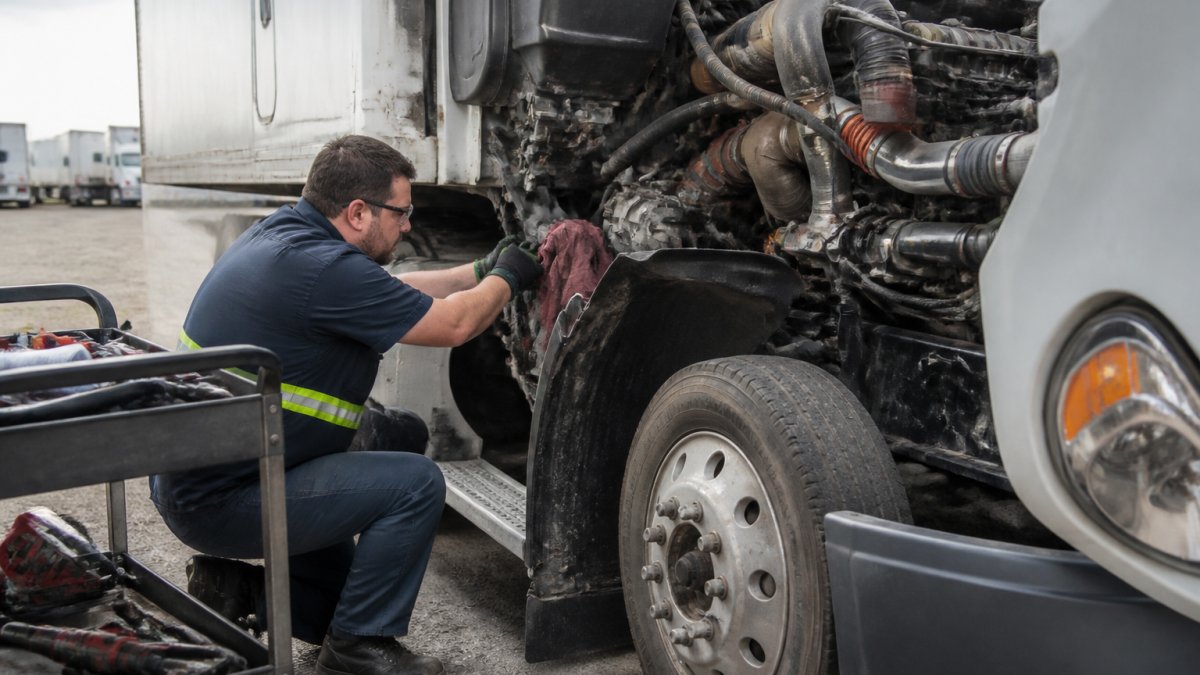
- Oil, filter, and fluid services, including coolant and DEF top-offs.
- Tire work, rotations, replacements, and pressure management, where the service vehicle carries the necessary tire tools.
- Brake service on many medium-duty and commercial configurations, including pad and shoe replacement, when the technician has the right tools and lift or jacking equipment.
- Battery testing and replacement, alternator and starter diagnosis, and basic electrical fault-finding.
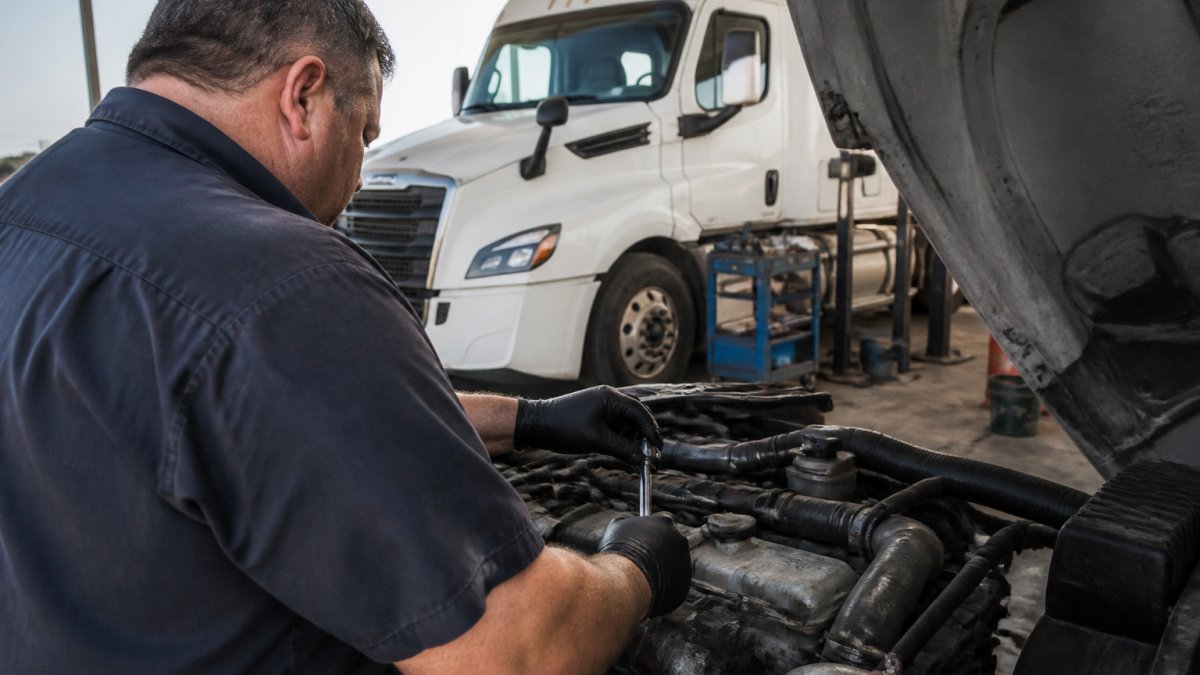
- Belts, hoses, and minor component replacement that does not require lifting the cab or removing major assemblies.
- Diagnostic scans and fault-code reads using OEM-level or equivalent diagnostic tools.
Tasks that usually need a shop
Be skeptical of any provider who claims everything can be done in the yard. These jobs typically require equipment, space, or environmental controls that a service truck does not carry:
- Major engine and transmission overhauls, and internal engine work.
- Frame, structural, and collision repair.
- Alignment work that requires a dedicated alignment rack.
- Welding and fabrication on structural components.
- Warranty repairs that must be performed at an authorized dealer to preserve coverage.
- Any job requiring a lift, pit, or overhead crane for safe access.
The time, labor, and downtime difference
The trade-off is that on-site labor often bills at a premium and the provider may need to return with a part if the first visit turns up something unexpected. That is why parts staging matters: give the provider the vehicle list, mileage, and known issues in advance so the service truck arrives with the right filters, fluids, and common wear parts.
When the shop is still the right call
Choose the shop when the job needs specialized equipment, when the vehicle is under warranty that requires dealer service, when the repair is structural or collision-related, or when the diagnosis is complex enough that a controlled environment will save time overall.
How to split the work
| Factor | On-Site Mobile Service | Traditional Shop Visit |
|---|---|---|
| Travel and downtime | Minimal; truck stays on site | Driver and vehicle leave the yard |
| Scheduling | Flexible, often same-day | Queue and bay availability |
| Routine service | Well suited | Well suited |
| Major overhauls | Limited; may need a shop | Better equipped |
| Towing costs | Avoided in most cases | Often required for breakdowns |
| Best use | Scheduled PM, inspections, tires, minor repairs | Overhauls, structural work, warranty service |
For fleets weighing reliability concerns before switching, our guide on whether mobile fleet repair is reliable covers what to expect.
In-House vs. Outsourced Fleet Maintenance: Which Fits Your Operation?
Outsourcing shifts that overhead to a provider. You get scheduled service without carrying a full-time shop, and you can scale up or down with your fleet. For small and mid-size operations, the outsourced model usually wins on cost per mile. If you're leaning that way, our guide on choosing a mobile mechanic for commercial trucks explains how to judge the fit.
What to Check Before You Book a Mobile Fleet Service
Watch out: a vague answer on warranty or liability is a red flag. Get the terms in writing before the first service call. For a step-by-step walkthrough, see our mobile mechanic booking guide.
Get a Fleet Maintenance Quote from Ryan's Mobile Repair LLC
At Ryan's Mobile Repair LLC, we bring mobile fleet maintenance directly to your yard, with upfront estimates, payment plans, and 24/7 availability. Our mechanics handle a wide range of needs, including engine and brake repairs.
Get started with Ryan's Mobile Repair LLC.
Frequently Asked Questions
Is on-site fleet maintenance more cost-effective than taking vehicles to a shop?
Whether on-site fleet maintenance is cost-effective depends on the work needed and the circumstances of your fleet. Ask Ryan's Mobile Repair LLC for an upfront estimate.
What services can a mobile fleet mechanic perform on-site?
Ryan's Mobile Repair LLC provides mobile automotive, tractor trailer, and fleet repair services, including engine and brake repairs and fleet maintenance. Contact the business to confirm whether it can handle a specific job on-site.
How often should commercial fleet vehicles be maintained?
Follow the manufacturer's interval for each vehicle, then tighten it based on duty cycle. Trucks running short-haul routes with frequent stops usually need service sooner than long-haul units. A practical fleet maintenance schedule bundles routine inspections every 5,000 to 10,000 miles or roughly every 60 to 90 days, whichever comes first, plus a DOT inspection cycle that matches your compliance requirements. Track work orders so intervals adjust to what your vehicles actually show, not a generic calendar.
How do I choose a mobile fleet maintenance provider?
Ask about the provider's qualifications, response times, warranty terms, and whether it can handle a job that turns out bigger than expected. Ryan's Mobile Repair LLC provides upfront estimates; contact the business to discuss your fleet's needs.
The difference between a fleet that runs and a fleet that struggles often comes down to where maintenance happens. If downtime and unpredictable repair bills are eating into your margins, it's worth seeing what on-site service can do for your operation. Ryan's Mobile Repair LLC offers mobile fleet maintenance with upfront estimates, 24/7 availability, and payment plans to fit your budget. Get started with Ryan's Mobile Repair LLC and turn maintenance from a cost center into an uptime advantage.