 how-to
How to Find a Mobile Mechanic for Commercial Vehicles
Quick Summary
A mobile mechanic for commercial vehicles is a technician who brings diagnostic equipment, tools and parts to your truck, trailer or fleet vehicle instead of towing it to a shop. This keeps the vehicle where it is and reduces downtime. Ryan's Mobile Repair LLC provides mobile automotive, tractor trailer, and fleet repair services that come directly to you.
- Share your exact location, such as a highway, mile marker, cross street or GPS pin, to avoid delayed dispatch.
- Set warning triangles behind and around the disabled vehicle under FMCSA roadside rules.
- Ask for a certificate of insurance and confirm the provider has an active operating authority number.
- Ask whether technicians work on air brakes, diesel aftertreatment and trailer electrical systems.
- Request a written estimate covering call-out and after-hours charges before work begins.
Table of Contents
- What a Mobile Mechanic for Commercial Vehicles Actually Does
- How Mobile Truck Repair Works From Breakdown to Fix
- Commercial Vehicle Roadside Assistance: Safety and Response Times
- Mobile Fleet Maintenance and Preventive Service Schedules
- Mobile Repair Costs, Call-Out Fees, and What Affects the Bill
- How to Vet a Mobile Mechanic for Commercial Work
- Booking Mobile Service for Your Trucks, Trailers, or Fleet
- Frequently Asked Questions
What a Mobile Mechanic for Commercial Vehicles Actually Does
Last Updated: November 1, 2026
A mobile mechanic for commercial vehicles is a technician who brings diagnostic equipment, tools and parts to your truck, trailer or fleet vehicle instead of towing it to a shop.
Most mobile mechanics handle a core set of jobs. Ryan's Mobile Repair LLC can handle a range of needs, from engine and brake repairs to fleet maintenance for businesses of all sizes.
Mobile service is not the same as roadside towing, though the two often overlap. A tow truck moves a broken vehicle. A mobile mechanic diagnoses and repairs it on site, and calls for a tow only when the job cannot be done where the vehicle sits.
How Mobile Truck Repair Works From Breakdown to Fix
A typical mobile repair follows a predictable sequence. The driver reports the problem, the provider confirms the location and vehicle, a technician is dispatched, and the work happens on site. Knowing each stage helps you set realistic expectations.
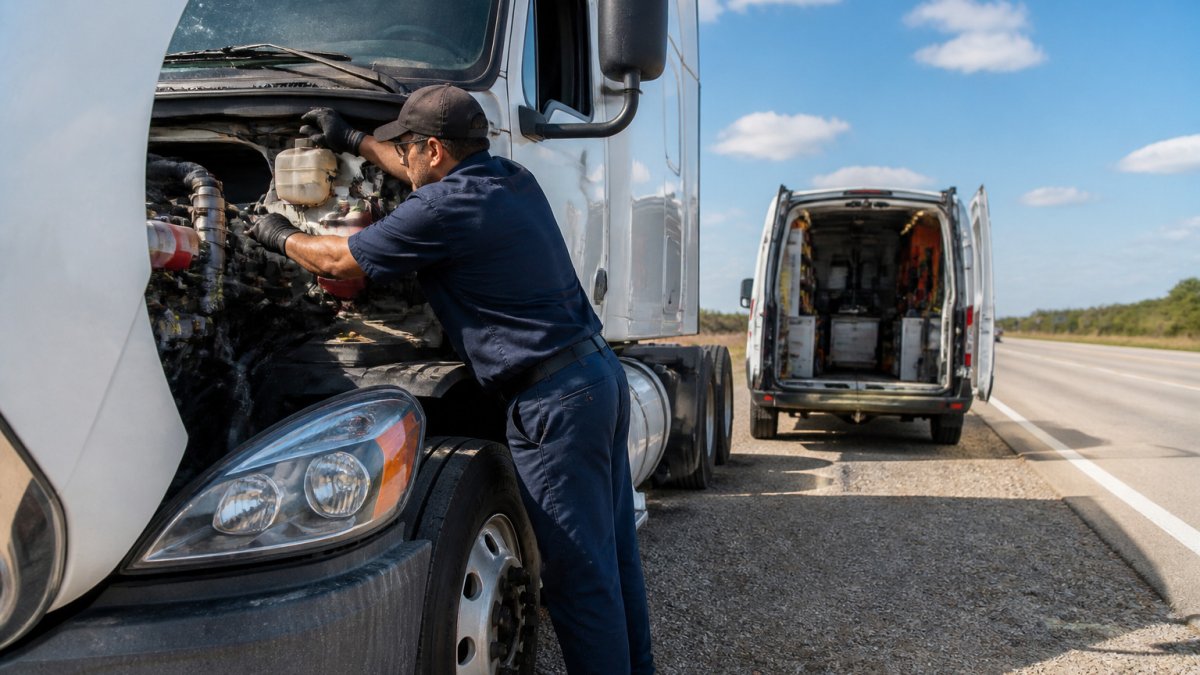
Clear information about symptoms, location and vehicle type helps the provider prepare for your visit.
Step-by-Step: Diagnosing the Breakdown and Requesting Service
Then follow these steps:
- Stop safely. Move the vehicle off the travel lane if possible, set hazard lights and deploy warning triangles or flares.
- Record symptoms. Write down what happened, what you heard or saw, and whether the problem is getting worse.
- Share your exact location. Give a highway, mile marker, cross street or GPS pin. Vague locations are the most common cause of delayed dispatch.
- Confirm service scope. Ask whether the likely repair can be handled on site or whether a tow will be needed.
Watch out: Don't let a driver attempt major repairs roadside without authorization. Unqualified work can turn a minor fault into a larger, costlier one.
Preparing Your Vehicle and Site for the Technician
Keep the vehicle accessible, with enough space for a service van to park beside it.
Have the vehicle's keys, registration, fleet account number and any maintenance records ready. If the truck is loaded, tell the provider, because cargo weight and access can affect the repair plan.
Commercial Vehicle Roadside Assistance: Safety and Response Times
Roadside assistance for commercial vehicles carries higher stakes than for passenger cars. A disabled tractor-trailer on an interstate shoulder is a fixed object in a high-speed environment, and the driver, the cargo, and passing motorists are all exposed until the vehicle is moved or repaired. That gap is where safety is won or lost.
The first ten minutes: a driver safety sequence
A practical sequence that experienced drivers and safety managers follow:
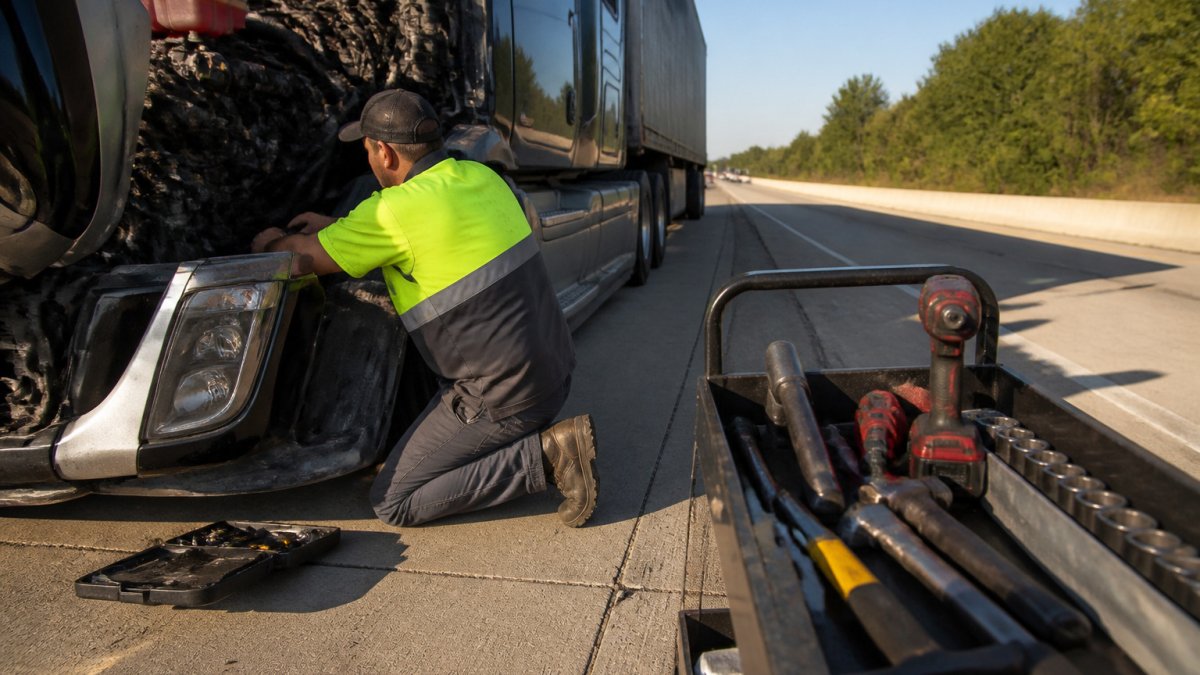
- Get out of the travel lane. If the vehicle can still roll, move it as far onto the right shoulder as the surface allows. A vehicle on the shoulder is far safer than one stopped in a live lane.
- Set the parking brake and shut down the engine unless the symptom requires it running for diagnosis. Note any warning lights before shutdown.
- Turn on hazard flashers immediately and, at night or in low visibility, turn on the parking lights as well.
- Deploy warning devices. Under FMCSA roadside emergency warning device requirements, drivers of commercial motor vehicles generally must place warning triangles (or bidirectional reflective triangles) behind and around the vehicle, typically one at the rear, one toward oncoming traffic, and one at the front or side, spaced to give approaching traffic time to react. Follow the specific placement distances in the regulation for the road type.
- Exit on the safe side. Leave through the door away from traffic, and move well off the shoulder, behind a guardrail if one exists, before making calls.
- Keep reflective gear on. A high-visibility vest and a flashlight are cheap insurance at night.
What actually drives response time
Arrival time depends on several variables that are worth asking about directly:
- Distance and route. A technician 15 miles away on a clear interstate may arrive faster than one 8 miles away across a congested urban corridor.
- Time of day and traffic. Rush hour and overnight construction zones can double travel time.
- Technician availability. Ask whether the dispatcher has a backup technician.
Ask for a realistic arrival window, not a best-case number, and confirm whether the quoted window includes diagnosis or only arrival.
While you wait
Keep the hazard lights on and the warning devices visible. Stay in a safe location away from traffic, inside the cab with the seatbelt on is generally safer than standing on the shoulder, but if the vehicle is in a live lane, get out and well clear.
For the underlying roadside safety rules that apply to commercial motor vehicles, see the Federal Motor Carrier Safety Administration roadside safety guidance.
The article lays out the factors that drive response time and the warning-device steps drivers should follow:
| Factor | What it affects | Action |
|---|---|---|
| Distance and route | Travel time to the vehicle | Compare with traffic conditions |
| Time of day and traffic | Rush hour and construction can double travel time | Ask about peak-hour windows |
| Technician availability | Whether a backup can be dispatched | Ask if a backup technician exists |
| Parts on hand | Common parts are faster than dealer-only components | Ask what parts the van carries |
| Access | Tight yards or soft shoulders add delay | Describe the access situation |
Mobile Fleet Maintenance and Preventive Service Schedules
Reactive repairs cost more than planned maintenance. Fleets that schedule regular service tend to catch small problems before they become breakdowns.
For fleets with multiple vehicles, a service calendar that tracks mileage or engine hours works better than fixed dates alone.
Mobile maintenance makes scheduled service easier to keep.
Ryan's Mobile Repair LLC offers fleet maintenance for businesses of all sizes, and the exact schedule depends on each vehicle's age, mileage and duty cycle.
Mobile Repair Costs, Call-Out Fees, and What Affects the Bill
Pricing depends on several factors, including the type of vehicle, the scope of the repair, and the parts and labor involved. Request a quote for your specific needs.
Ask any provider for a clear breakdown before work begins. Ryan's Mobile Repair LLC provides upfront estimates to ensure a transparent experience. Ryan's Mobile Repair LLC offers payment plans. Pricing depends on the specifics of each job, so request a quote directly through the Ryan's Mobile Repair LLC website.
How to Vet a Mobile Mechanic for Commercial Work
Commercial work requires more scrutiny than a typical car repair. A mobile mechanic who is excellent on passenger vehicles may lack the tools, insurance, and diagnostic software for a Class 8 diesel, a refrigerated trailer, or a liftgate. The vetting checklist below is built around what actually goes wrong in fleet relationships, not just what sounds reassuring on a website.
Verify the business, not just the technician
- Operating authority and registration. For-hire motor carriers and some service providers must hold active operating authority from the Federal Motor Carrier Safety Administration. Ask for the MC or USDOT number and confirm it is active. A provider that cannot produce one may be an informal operation.
- Insurance. Ask for a certificate of insurance showing general liability and, if they will drive your vehicles, commercial auto coverage. Confirm the limits are adequate for the value of your equipment and cargo. A provider who cannot produce a COI on request is a risk you are accepting.
- Licensing and local requirements. Some jurisdictions require a business license or specific permits for mobile repair. Ask.
Confirm commercial-vehicle capability
- Vehicle types and systems. Ask specifically whether the technicians regularly work on semi-trucks, tractor-trailers, box trucks, buses, and the equipment in your fleet, including diesel aftertreatment (DPF/DEF), air brakes, and trailer electrical systems. Passenger-car experience does not transfer automatically.
- Diagnostic tools. Ask what diagnostic platform the provider uses to read fault codes and service commercial vehicles.
- Parts sourcing. Ask how the provider sources parts and what lead times to expect.
Get the commercial terms in writing
- Written estimate and scope. A reputable provider documents the diagnosis, the proposed repair, parts, labor, and any call-out or after-hours charges before work begins. Ask whether the diagnostic fee is credited toward the repair if you approve it.
- Warranty. Ryan's Mobile Repair LLC offers a customer satisfaction guarantee; ask for its terms in writing.
- Payment terms. Fleets often need net terms or purchase-order billing. Confirm whether the provider offers payment plans and what payment methods it accepts.
Red flags worth walking away from
- A quote that is dramatically below others with no explanation of what is excluded.
- No certificate of insurance or reluctance to provide one.
- No written estimate, or an estimate that changes after the work starts without approval.
For background on how commercial vehicle maintenance standards are set, see the FMCSA vehicle maintenance regulations.
Booking Mobile Service for Your Trucks, Trailers, or Fleet
When you are ready to book, prepare the basics: vehicle type and unit number, the symptoms or maintenance needed, your exact location, and a preferred time window. For scheduled fleet work, share your maintenance calendar so the provider can plan routes and parts in advance.
Ryan's Mobile Repair LLC serves Central Texas with service available 24/7. To request a quote or schedule service, use the contact options on the Ryan's Mobile Repair LLC website.
Frequently Asked Questions
What does a mobile mechanic for commercial vehicles repair?
Ryan's Mobile Repair LLC provides mobile repair for commercial vehicles, including engine and brake repairs and fleet maintenance. Ryan's Mobile Repair LLC works on tractor trailers, commercial vehicles, and fleet equipment, and covers engine and brake repairs as well as fleet maintenance. Scope depends on the vehicle and the tools that can be brought to the site. Major jobs that require a lift, a shop press, or extensive parts access may still need a shop or a tow, so confirm the scope of work before the technician arrives.
Can a mobile mechanic service an entire commercial fleet?
Yes, a mobile mechanic can service a fleet on a scheduled basis, as long as the provider has the capacity and planning to cover multiple vehicles across locations. Fleets with several trucks or trailers usually benefit from a recurring maintenance schedule, so inspections and service happen before breakdowns occur. Ryan's Mobile Repair LLC offers fleet maintenance for businesses of all sizes and is available 24/7 for emergency calls. Ask the provider how it plans routes, how it prioritizes urgent calls, and how it records completed work for your fleet.
What should I ask before hiring a mobile fleet mechanic?
Ask what credentials the technicians hold, whether the provider carries liability insurance, and what warranty or guarantee applies to the completed work. Request an upfront estimate in writing and ask how call-out fees are calculated. Confirm the service area, expected response times, and whether the provider can handle your specific vehicle types, including diesel engines and trailers. Finally, ask how repairs that turn out to be more complex than expected are handled and whether a shop or tow would be needed.
Is mobile truck repair more expensive than taking a truck to a shop?
Pricing depends on the specifics of each job, so request a quote for your vehicles. Mobile service can reduce the time a vehicle spends out of service. Ryan's Mobile Repair LLC provides upfront estimates and offers payment plans. For current prices or a quote for your vehicles, contact Ryan's Mobile Repair LLC directly through its website.
Ryan's Mobile Repair LLC brings fast, on-site repair for commercial vehicles directly to your location, backed by upfront estimates and flexible payment plans. Contact us to get your trucks, trailers or fleet back on the road.