 how-to
How to Get Emergency Roadside Repair for Trucks
Quick Summary
Emergency roadside repair for trucks is on-site mechanical service that comes to your disabled semi or work truck instead of towing it to a shop. A mobile technician diagnoses the fault, makes the repair if parts and time allow, and gets you moving again.
- Call dispatch as soon as the truck is stopped safely, and share your exact location.
- Turn on hazard lights and set out warning triangles, with one 10 feet behind the truck.
- Stay in the locked cab with seat belts on if the truck is in a travel lane.
- Call 911 first for fire, fuel spills, injuries, or a truck blocking a live lane.
- Get the diagnostic fee, repair estimate, and authorization in writing before work begins.
Table of Contents
- What Emergency Roadside Repair for Trucks Covers
- How to Request Emergency Roadside Repair for a Semi Truck
- Staying Safe While You Wait for 24/7 Mobile Truck Repair
- Repair On-Site or Tow: How to Decide
- What Truck Roadside Repair Costs and How Billing Works
- How Long Response Takes and What to Expect Overnight
- Request Ryan's Mobile Repair LLC Service for Your Truck Breakdown
- Frequently Asked Questions
What Emergency Roadside Repair for Trucks Covers
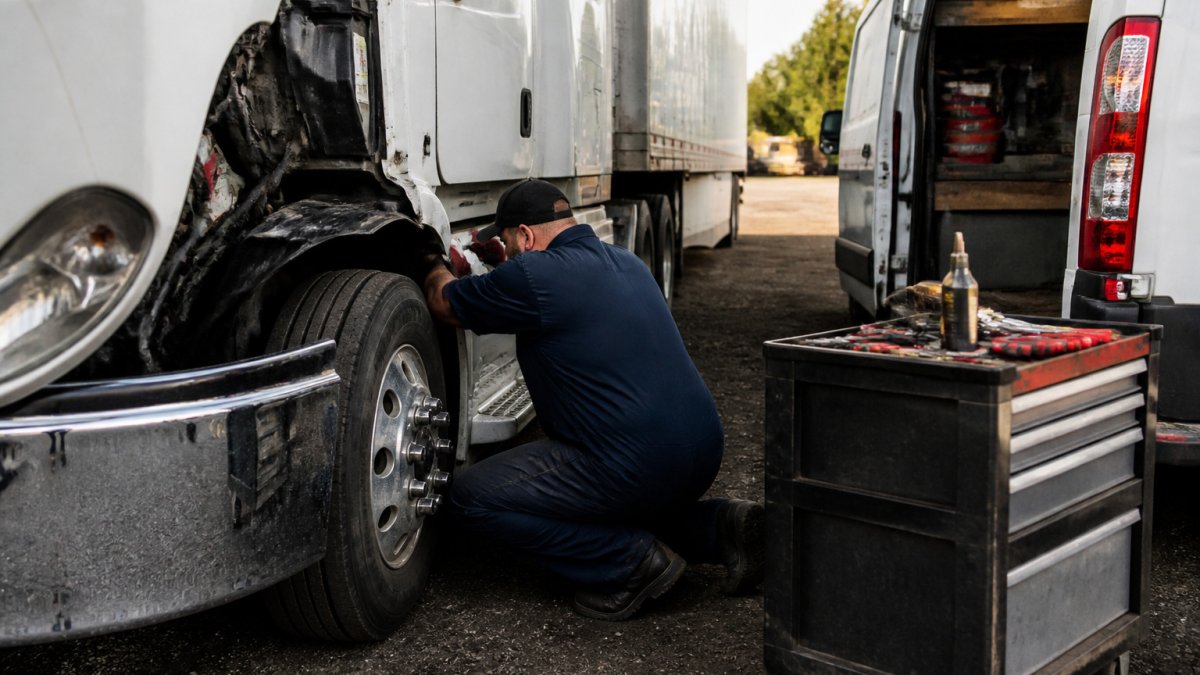
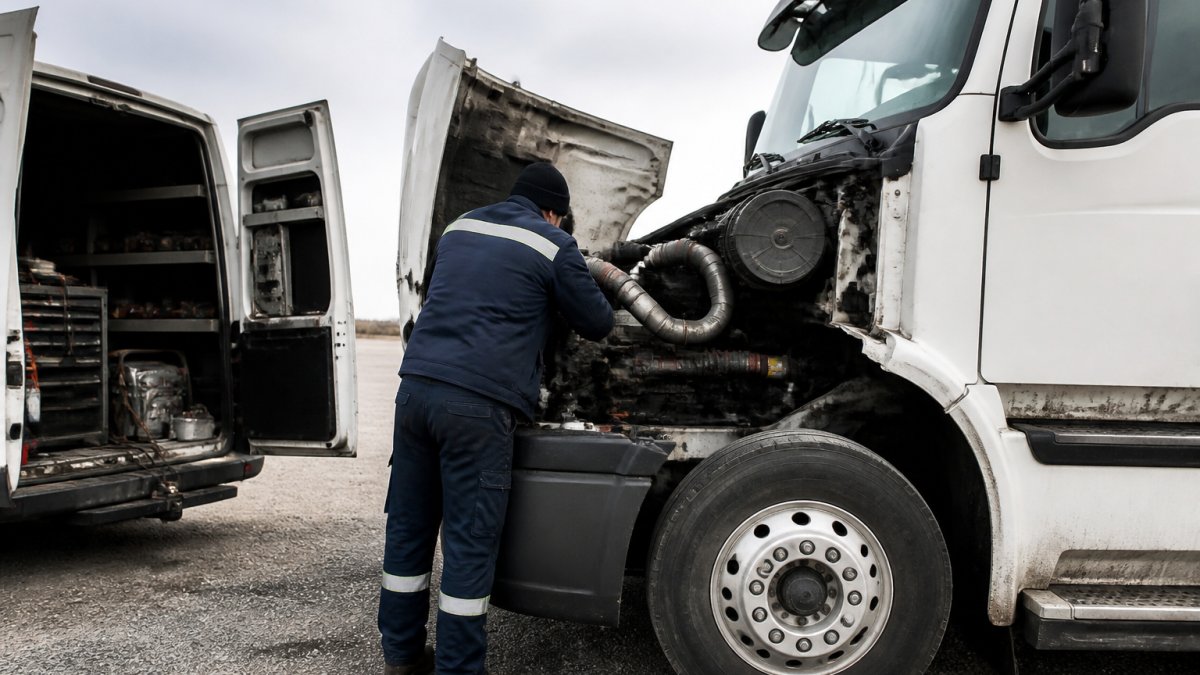
Emergency roadside repair for trucks is on-site mechanical service that comes to a disabled semi, box truck, or work truck instead of towing it to a shop.
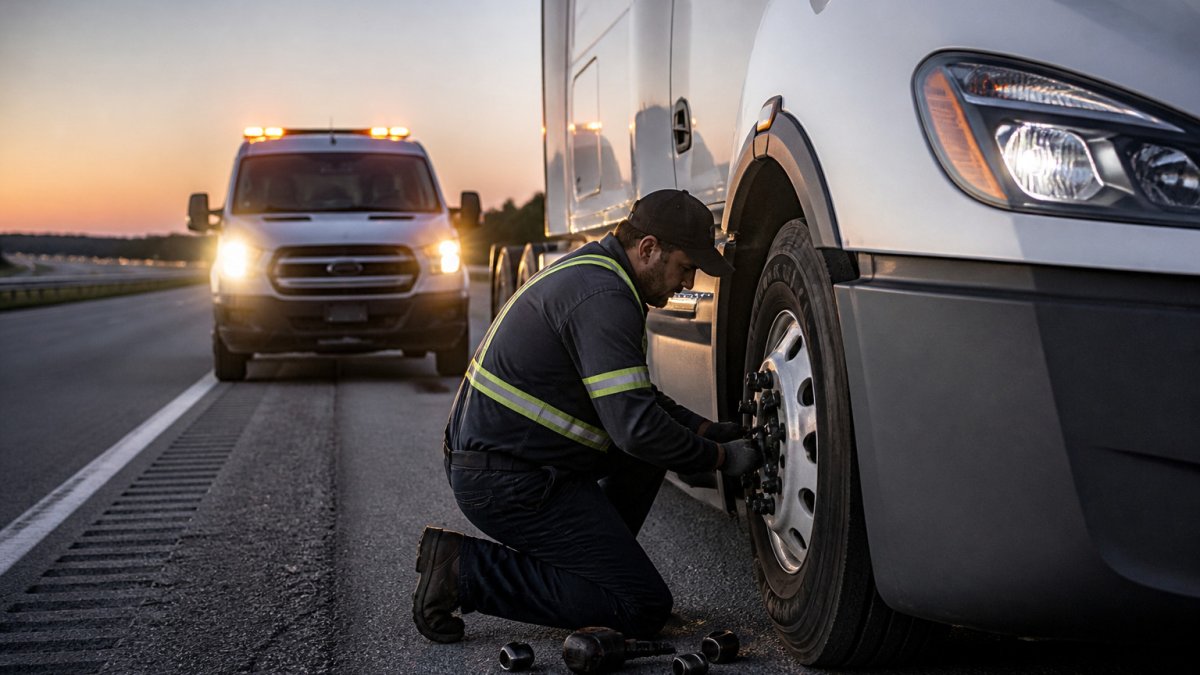
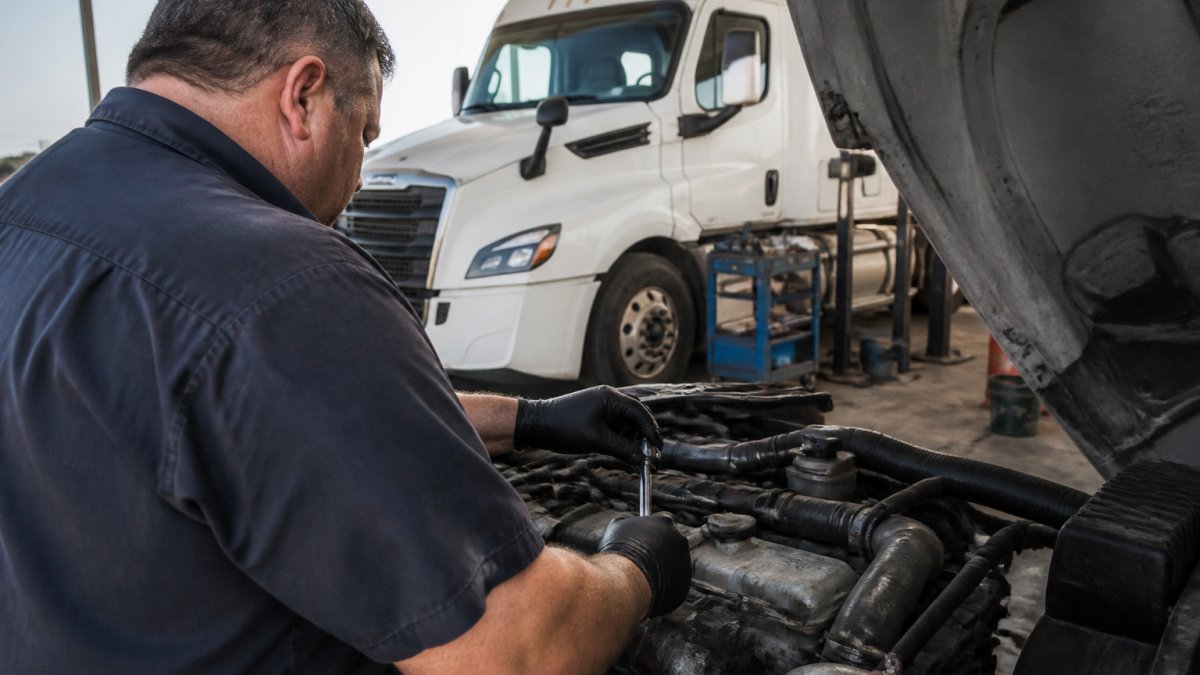
Mobile truck repair services are often called on for the common failures that stop a truck on the highway, such as brake problems, electrical faults, battery and charging issues, tire blowouts, fuel system trouble, and engine warning-light faults.
Mobile service is not a substitute for every repair. Major engine rebuilds, transmission replacements, and extensive body damage usually require a shop with a lift and a full parts inventory.
How to Request Emergency Roadside Repair for a Semi Truck
Call the provider's dispatch line as soon as the truck stops safely. Ryan's Mobile Repair LLC is available 24/7 in the Central Texas area, so a call at 2 AM reaches the same team as a call at noon.
Dispatch will ask a set of questions to decide which technician and parts to send. Expect a request for your location, truck make and model, and a description of the fault.
Information to Have Ready When You Call
Have these details ready before you dial:
- Exact location, including highway, mile marker, exit, or nearest landmark
- Truck make, model, and model year
- Unit or VIN number, if your fleet uses them
A precise location cuts response time more than anything else. Share your location pin if your phone allows it.
What a Mobile Mechanic Can Do on the Roadside
A mobile technician typically works from a service vehicle. Many roadside jobs can be completed in a single visit, but the specific work a technician can perform depends on the fault and the parts available.
Some repairs need parts that are not on the truck. In that case, ask the provider how it handles follow-up visits or tow recommendations before you authorize work.
Staying Safe While You Wait for 24/7 Mobile Truck Repair
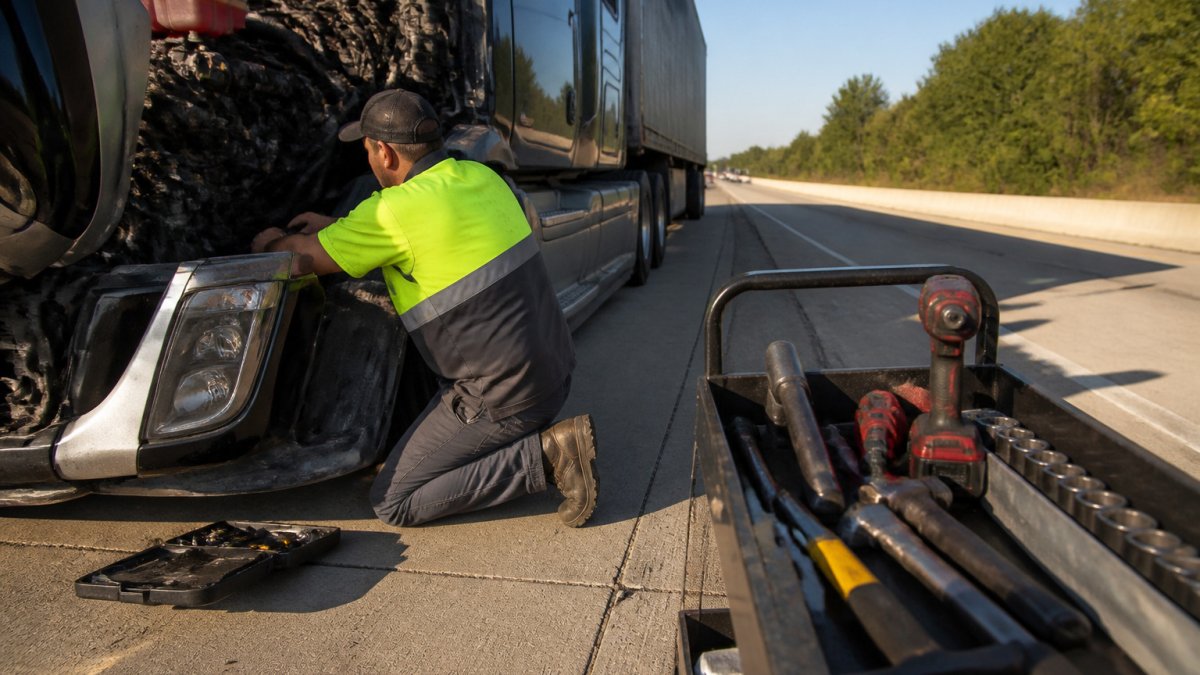
Your safety comes first while help is on the way. The steps below follow the same general sequence professional drivers are trained to use, and they apply whether you are on an interstate shoulder or a rural two-lane road.
Secure the scene before you do anything else
- Get the truck off the travel lane if it can move. Pull as far onto the right shoulder as the surface allows. If the shoulder is soft, narrow, or nonexistent, stop where the truck is least likely to be struck and turn the wheels away from traffic.
- Turn on the hazard lights immediately. Leave them on for the entire wait, even in daylight.
- Set out warning devices. Federal rules for commercial vehicles generally call for reflective triangles placed behind and around the truck. A common pattern is one triangle 10 feet behind the truck, one 100 feet behind, and one 100 feet ahead on a two-way road; on a divided highway, place the third triangle between the truck and the nearest traffic lane. On curves, hills, or in low visibility, place devices farther back so approaching drivers get more warning.
- Turn off the engine unless it must run for a heater, APU, or liftgate. Do not smoke or use open flame near a truck with a fuel or fluid leak.
- Exit on the side away from traffic and move behind the barrier or well off the shoulder if one is available. Never stand between the truck and passing vehicles.
If the truck is in a live lane, on a blind curve, or leaking fuel, do not attempt to direct traffic yourself. Call 911 first, then call dispatch. A police or highway patrol unit can block the lane while you wait.
Choose where to wait
- Best: inside the cab with seat belts on, doors locked, hazards flashing.
- Acceptable: behind a guardrail or well off the shoulder, wearing a reflective vest.
- Avoid: standing on the shoulder, walking along the traffic side, or sitting in the truck if it is in a travel lane and traffic is moving fast.
Many drivers find it helpful to stay in a locked cab with the doors shut until the technician arrives and identifies themselves. Confirm the technician's name and company before you exit, and ask them to show identification if you do not recognize the service vehicle.
What you can safely check before the technician arrives
A few checks are safe for most drivers and can speed up the repair. To learn how to head off these breakdowns, read Preventative Maintenance for Commercial Vehicles That Cuts Downtime.
- Tires: Look for a visibly flat or shredded tire. Note which position (steer, drive, trailer) and whether the wheel is damaged.
- Fluids: Look for puddles under the truck. Note the color and approximate location, red for transmission or power steering, green or orange for coolant, amber or black for oil or fuel.
- Lights and warning lamps: Write down which dashboard lights are on and whether they are steady or flashing.
Write down what you observe so you can pass it along to dispatch. A short, specific description, "right rear trailer tire is flat and the wheel looks bent", helps the dispatcher send the right equipment on the first trip.
Keep a small notepad or use your phone's notes app to record symptoms, warning lights, and the time each one appeared. Technicians use that timeline to narrow down intermittent faults.
When to call 911 instead of dispatch
Call 911 first if there is a fire, a fuel spill, an injury, the truck is blocking a live lane, or you feel unsafe because of traffic or another person. Once the scene is stable, call your provider. A reputable provider will not ask you to stay in an unsafe position while waiting for a technician.
Repair On-Site or Tow: How to Decide
The right choice depends on the fault, the truck's load, and how far you are from a shop.
A tow makes more sense when the truck is unsafe to drive but the repair needs a lift, a welder, or parts the technician cannot carry.
Ask the technician for a direct recommendation. A reputable provider will say when a tow is the better option, even if it means less work for them.
What Truck Roadside Repair Costs and How Billing Works
Roadside repair pricing is not standardized, and no reputable provider can quote a fixed price before knowing the fault. What you can do is understand the common cost factors, ask the right questions, and get the terms in writing before work begins.
Common cost factors
Most roadside invoices combine several elements:
- Service call or dispatch fee: A flat charge for sending a technician, often higher after hours, on weekends, or on holidays.
- Mileage or travel charge: A per-mile rate for the distance from the technician's location to your truck. Remote locations cost more.
- Labor: Billed hourly or by the job. Diagnostic time may be billed separately from repair time.
Pricing depends on the specific fault and job. Request an upfront estimate for your truck from Ryan's Mobile Repair LLC through our website before work begins, and ask what could change that estimate.
Estimate and authorization
A common pattern is a two-step authorization:
- Diagnostic estimate: The provider quotes a fee to diagnose the fault. That fee may be credited toward the repair if you proceed.
- Repair estimate: After diagnosis, the provider gives a written or verbal estimate for parts and labor. You authorize the work, and the provider documents any change before proceeding.
Ask these questions before you authorize work:
- Is the diagnostic fee separate from the repair estimate?
- What is the hourly labor rate, and is there a minimum?
- Are parts new, remanufactured, or used, and is there a warranty?
Get the estimate and authorization in writing, text, email, or a signed work order. A written record protects both you and the provider if the final invoice differs from the estimate.
Compare on-site repair against tow plus shop
A tow charge, shop labor, and lost hours on the road often add up to more than a mobile repair. For a side-by-side look at what each option really costs, read Mobile vs Shop Repair Cost: What You'll Really Pay. For a fleet, the downtime cost of a truck sitting at a shop can exceed the repair bill itself. When comparing options, include:
- The tow or recovery charge
- Shop diagnostic and repair labor
- Parts, including any core charges
Payment and documentation
Ask about payment options before the technician starts. Ask about accepted payment methods and billing terms before the technician starts. Confirm whether payment is due on completion or billed later.
Keep the following for your records:
- The written estimate and any authorized changes
- The final invoice with itemized parts and labor
- The technician's name and the work order number
Fleet managers should confirm the provider's billing options, including whether it can bill to a corporate account and include a purchase order number on the invoice. That keeps roadside charges easy to reconcile against maintenance records.
The article lists the common line items that make up a roadside invoice, which a reader can compare at a glance.
| Cost factor | What it covers | Note |
|---|---|---|
| Service call or dispatch fee | Sending a technician to the truck | Often higher after hours, on weekends, or on holidays |
| Mileage or travel charge | Distance from technician to truck | Remote locations cost more |
| Labor | Hourly or per-job work | Diagnostic time may be billed separately |
| Parts | Replacement components | Ask if new, remanufactured, or used |
| Equipment charges | Heavy-duty towing, recovery, second technician | Added as separate line items |
| Taxes and fees | Applicable state and local taxes and surcharges | Permitted surcharges only |
How Long Response Takes and What to Expect Overnight
Response time depends on your location and other factors. Ask for an estimated arrival time when you call, and ask for an update if the estimate changes.
Stay reachable by phone so the technician can contact you on arrival. If you are in a remote stretch of highway, tell dispatch about nearby landmarks so the technician can find you without delay.
Request Ryan's Mobile Repair LLC Service for Your Truck Breakdown
If your truck is stranded, call Ryan's Mobile Repair LLC for on-site help. Our technicians are available 24/7 across Central Texas, and we provide upfront estimates. Send us your location and symptoms, and we will tell you what we can fix on the spot and whether a tow makes more sense.
Frequently Asked Questions
What does emergency roadside service cover for trucks?
Emergency roadside service for trucks can address some faults on site, but coverage varies by provider, so confirm what a technician can handle before you wait. Major engine or drivetrain work may still require a tow to a shop. Ryan's Mobile Repair LLC can tell you during the call whether a repair can be completed where your truck is parked.
How do I get emergency roadside repair for a commercial truck?
Call the mobile repair provider directly and describe the problem, your location, and the truck's make, model, and year. Give the nearest highway exit or mile marker so the technician can find you quickly. Ask for a response time estimate and an upfront estimate before work starts. Keep the hazard lights on and move the truck out of traffic if it is safe to do so while you wait.
How much does emergency roadside truck repair usually cost?
Pricing depends on the type of repair, the truck, the time of day, and whether parts are needed. Ryan's Mobile Repair LLC does not publish flat rates in this article, so the most accurate figure comes from an upfront estimate on your specific truck. Ask the technician to explain labor, parts, and any after-hours or travel charges before approving work. Payment plans may be available for larger repairs.
How long does it take for a mobile truck mechanic to arrive?
Arrival time depends on distance, traffic, current call volume, and the complexity of the repair the technician expects to perform. Give accurate location details to shorten the wait. Ryan's Mobile Repair LLC operates 24/7, but a realistic estimate for your location can only be confirmed when you call. Ask for a time window at the start of the call so you can plan your next steps.