 how-to
Benefits of Mobile Fleet Maintenance for Commercial Trucks
Last Updated: November 5, 2026
Quick Summary
Mobile fleet maintenance brings trained technicians to your yard, depot or roadside, so commercial trucks get repaired where they already are. This cuts vehicle downtime, drop-off and towing time, and the hidden costs of shop visits. It suits routine service and many common repairs, while heavy work usually belongs in a shop.
- Downtime is often a bigger cost than the repair bill itself.
- Mobile service removes drop-off, pickup, waiting and towing steps from each visit.
- Oil, filters, batteries, belts, hoses, sensors and brake pads on level ground suit mobile service.
- Alignment, major engine or transmission work and collision repair usually belong in a shop.
- Compare total cost, including transport and downtime, not just repair invoices.
Table of Contents
- How Mobile Fleet Maintenance Works for Commercial Vehicles
- Reducing Vehicle Downtime With On-Site Service
- Mobile Repair Versus Shop Repair: Which Fits Each Job
- Mobile Truck Repair for Emergency Breakdowns and Scheduled Service
- Cost Savings and How to Calculate Total Cost of Ownership
- Fleet Maintenance Best Practices for Mobile Programs
- Scheduling Your First Mobile Fleet Maintenance Program
- Frequently Asked Questions
Commercial trucks earn money only when they are on the road. Every hour a truck sits in a shop bay is an hour of lost revenue, and that cost is often bigger than the repair bill itself. Mobile fleet maintenance flips that equation by bringing trained technicians to your yard, your depot or the roadside, so repairs happen where your vehicles already are.
How Mobile Fleet Maintenance Works for Commercial Vehicles
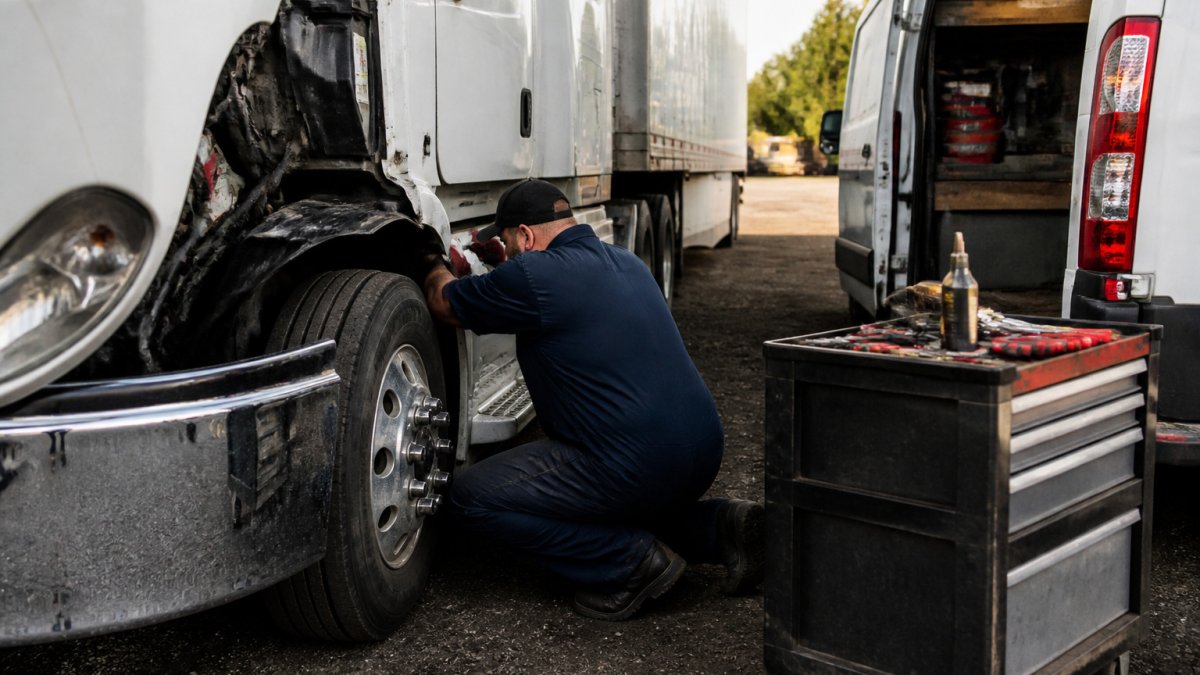
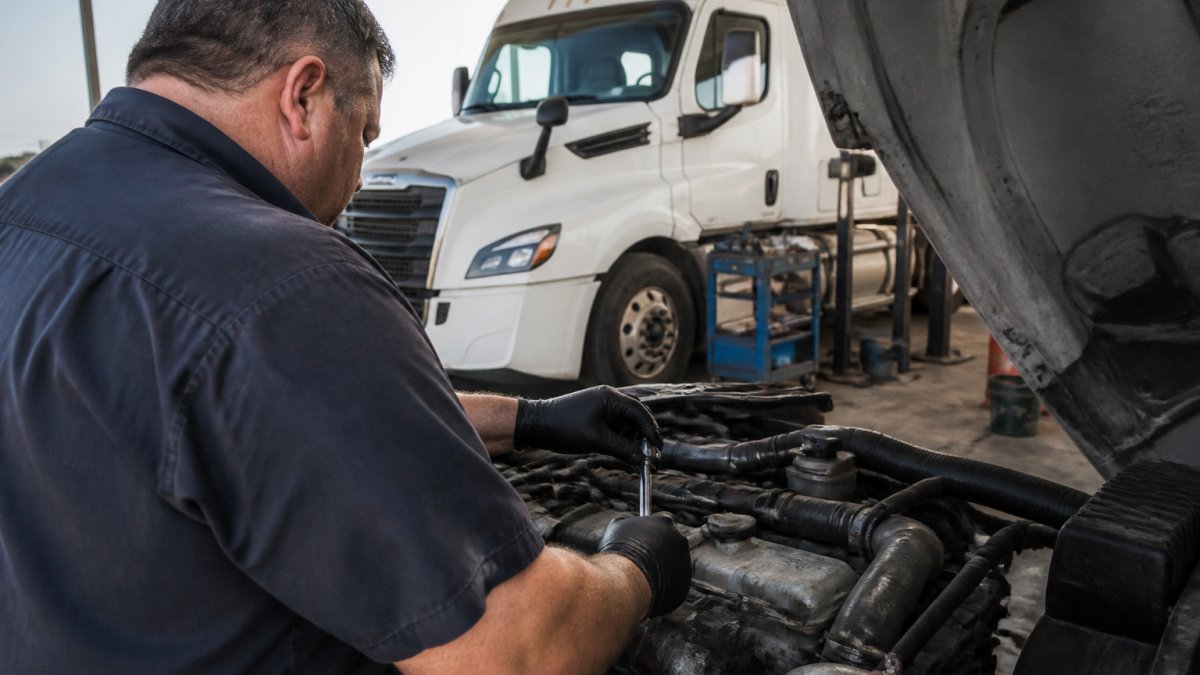
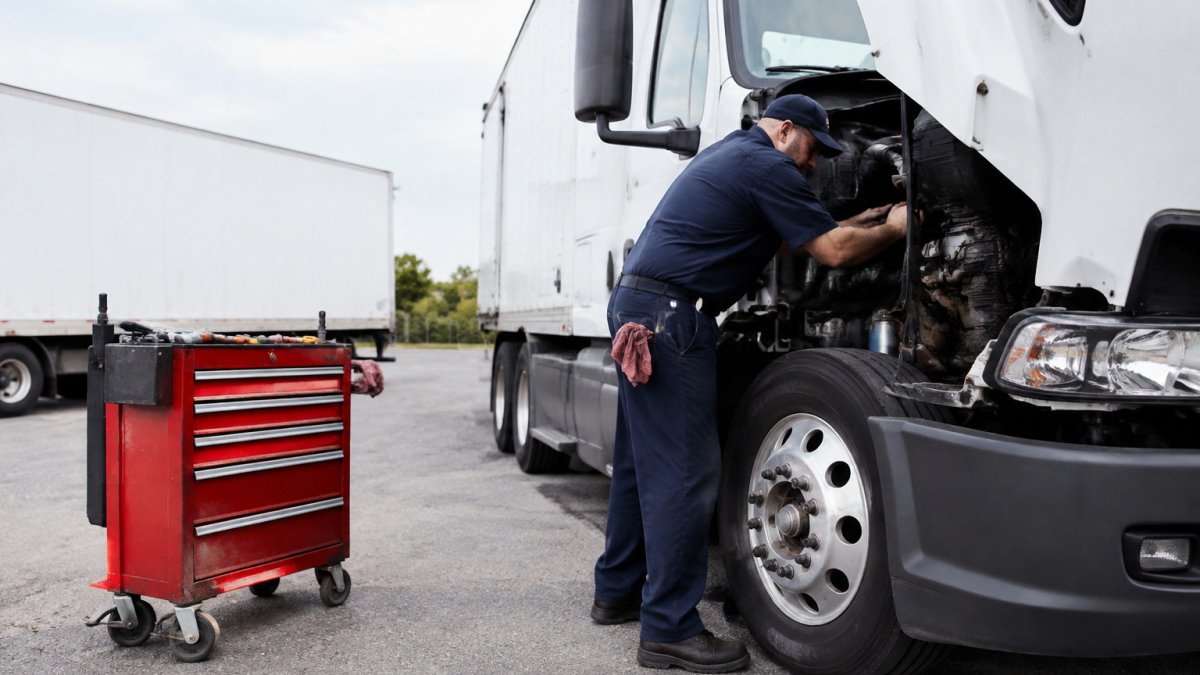
Mobile fleet maintenance means a qualified mechanic travels to the vehicle instead of the vehicle traveling to a shop. The technician arrives with tools, diagnostic equipment and common parts, then performs inspections, preventive service and repairs on site.
The process usually follows a simple flow:
- Request service: Report the issue or schedule routine maintenance by phone or online.
- Confirm the location and timing: Choose a time that fits your dispatch schedule, including early morning or evening slots.
- Diagnose on site: The technician checks the vehicle and reports what needs attention.
We make the process easy to plan. The truck stays parked in its normal spot, and your drivers stay on schedule.
Reducing Vehicle Downtime With On-Site Service
Downtime is the biggest hidden cost in fleet operations. A truck that is not moving does not deliver freight, complete routes or finish jobs.
A common mistake is measuring only the repair time. Fleet managers should also count the time spent getting the vehicle to the shop, waiting for a bay, and getting it back. Mobile repair removes most of that overhead.
Cutting Drop-Off, Pickup and Towing Time
Every shop visit adds steps that eat into productive hours:
- Drive time to the shop: A driver spends time transporting the vehicle.
- Waiting for a bay: Busy shops often schedule jobs days out.
- Towing: A vehicle that cannot be driven needs a tow, which adds cost and delay.
Mobile service can remove many of these steps.
Mobile Repair Versus Shop Repair: Which Fits Each Job
Most mobile-service pages tell you mobile repair is convenient and leave it there. The harder question is which jobs actually belong in your yard and which belong in a bay. Getting that split wrong is the fastest way to turn a mobile program into a scheduling problem.
Use four filters, in this order, to route each job.
Filter 1: Can the repair be done safely where the vehicle sits?
Safety decides before cost does. A job that needs the vehicle raised on a lift, a pit, or a stable level surface should not be done in a gravel lot or on a shoulder.
Watch out: a roadside shoulder is not a repair bay. If traffic, weather, or grade makes the work area unsafe, the correct call is to move the vehicle, not to save time by working where it stopped.
Filter 2: Does the job need equipment the truck cannot carry?
Mobile units carry hand tools, diagnostic scan tools, jacks, and a stock of common parts. They generally do not carry a lift, an alignment rack, a brake lathe, a heavy press, or a parts washer. Jobs that need those belong in a shop. Jobs that need only hand tools, a scan tool, and common wear parts are strong mobile candidates.
Filter 3: How much time and how many parts does the job take?
A mobile technician is a single resource. A job that ties that technician to one vehicle for a full day removes them from every other vehicle on your schedule. Short, well-defined jobs, a battery, a belt, a hose, a sensor, a filter, a set of brake pads, fit mobile service well. Long, open-ended jobs such as engine or transmission work, or a repair where the parts may not arrive until tomorrow, usually belong in a shop where the vehicle can sit without holding a technician hostage.
Filter 4: Where is the vehicle, and what is it worth to move it?
A truck that is drivable and near a shop has options. A truck that is loaded, blocking a dock, or stranded far from a shop usually does not. In that case, on-site diagnosis is often worth it even when the final repair will happen in a bay, because the diagnosis tells you whether the truck can be moved and what the repair will involve.
A practical routing table
| Job type | Usually mobile | Usually shop |
|---|---|---|
| Oil, filters, fluid checks, inspections | Yes | , |
| Batteries, belts, hoses, sensors, wiring diagnosis | Yes | , |
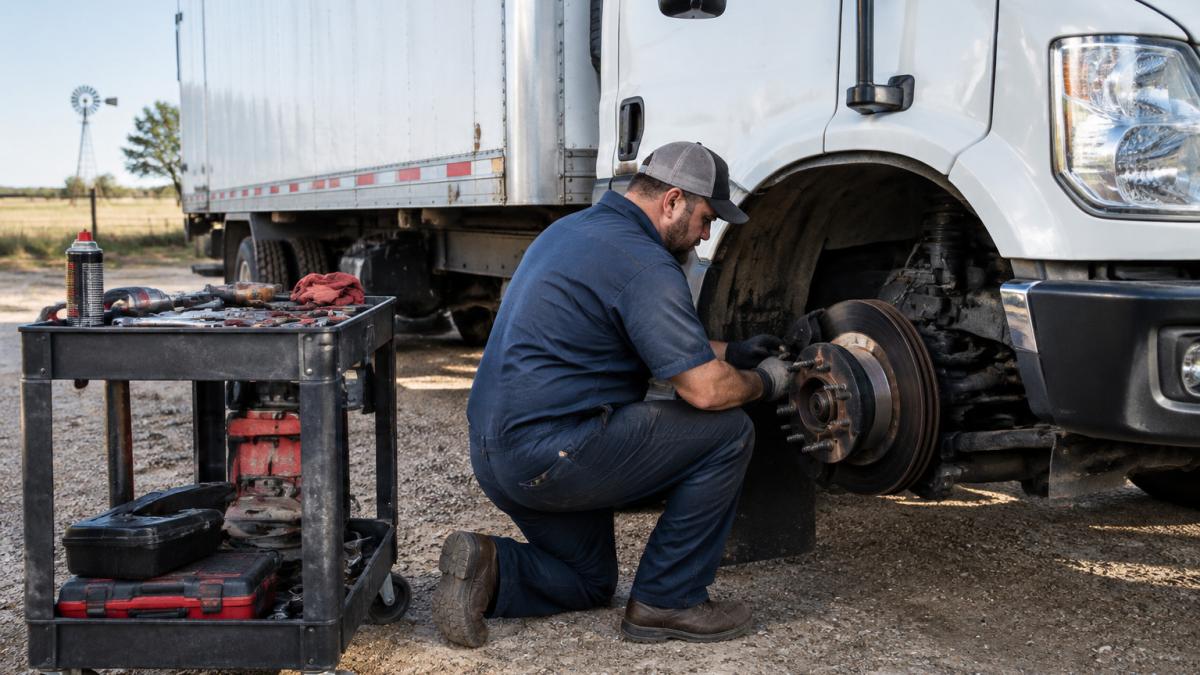
| Brake pads and rotors on firm, level ground | Yes | , |
| Tire replacement and basic tire service | Yes | , |
| Warning-light and electrical diagnosis | Yes | , |
| Wheel alignment | , | Yes |
| Major engine or transmission repair | , | Yes |
| Repairs needing a lift, press, or controlled environment | , | Yes |
| Collision or structural damage | , | Yes |
A useful middle path is to split the job. Send a mobile technician for the diagnosis and the small fixes, then schedule the heavy work in a shop once you know what it is.
Write your routing rules down and share them with dispatch. When the person taking the call knows which jobs go where, you stop losing time to back-and-forth decisions.
Mobile Truck Repair for Emergency Breakdowns and Scheduled Service
Mobile truck repair handles two very different needs. The first is the emergency breakdown, when a truck stops and the schedule is already at risk. The second is the scheduled service that prevents breakdowns in the first place.
For emergencies, speed matters most. A technician who can reach the vehicle quickly and begin diagnosis on site can keep a bad situation from getting worse. For scheduled service, consistency matters most.
Ryan's Mobile Repair LLC is available 24/7, so breakdowns outside business hours do not have to wait until morning. Ask any provider you consider about typical response times for your location before you commit.
Cost Savings and How to Calculate Total Cost of Ownership
Repair invoices are only part of the picture. To judge mobile fleet maintenance fairly, you have to compare the full cost of a mobile visit against the full cost of a shop visit for the same job. That means counting the costs that never appear on an invoice.
The categories to compare are:
- Labor and parts: the quoted repair cost from each option
- Transport: fuel, driver time, and towing to move the vehicle to a shop and back
- Downtime: lost revenue for every hour the vehicle is out of service
A worked comparison
The numbers below are illustrative only, not quotes. Substitute your own figures.
Assume a mid-size commercial truck that needs a routine preventive service and a brake job. Repair labor and parts are treated as equal for both options, so the difference lies in everything around the repair.
| Cost line | Shop visit | Mobile visit |
|---|---|---|
| Repair labor and parts | $900 | $900 |
| Towing (if not drivable) | $250 | $0 |
| Driver time to deliver and collect | 3 hours | 0 hours |
| Vehicle out of service | 2 days | 1 day |
| Downtime cost at $400 per vehicle-day | $800 | $400 |
| Administration | 1 hour | 1 hour |
When the math flips
Mobile service does not always win. It loses on total cost when:
- Downtime is cheap. If a vehicle can sit for days without affecting revenue, the shop's lower overhead may be the better deal.
- The job is large. A major repair that takes a shop several days is usually cheaper in a bay than in your yard, because the mobile technician's time is the scarce resource.
- The vehicle is far from coverage. Travel time to a remote location can erase the savings, especially if the technician has to make more than one trip for parts.
Build your own model
A simple spreadsheet is enough. For each job type, list the shop cost and the mobile cost across the five categories above.
Watch out: do not compare a mobile quote against a shop quote without adding transport and downtime to the shop side.
Pricing depends on the type of service, the vehicle, and the scope of work. Contact Ryan's Mobile Repair LLC for current pricing or a quote tailored to your fleet.
Fleet Maintenance Best Practices for Mobile Programs
A mobile program works best when it is planned. These practices help fleet managers get the most from mobile service:
- Keep a service log for each vehicle. Record dates, mileage and the work performed.
- Schedule preventive service in advance. Set regular intervals based on mileage or engine hours.
- Group jobs by location. Service several trucks during one visit to reduce travel time.
- Track downtime and repair frequency. Watch for vehicles that break down often.
Consistent records also make it easier to spot patterns, negotiate service terms and decide which vehicles need more attention.
Scheduling Your First Mobile Fleet Maintenance Program
Starting a mobile program does not require a big change. A phased approach works well:
- List your fleet. Note each vehicle, its mileage and its recent service history.
- Identify your highest-priority trucks. Start with the vehicles that cause the most downtime.
- Set a preventive schedule. Agree on service intervals for oil, filters, brakes and inspections.
- Book a first visit. Start with one or two vehicles to test the process.
- Review the results. After 60 to 90 days, compare downtime and repair costs with your earlier numbers.
- Expand the program. Add more vehicles once you see the benefit.
Ready to plan your first visit? Contact Ryan's Mobile Repair LLC to discuss your fleet and get an upfront estimate. We can help you decide which vehicles and jobs to start with.
Frequently Asked Questions
How does mobile fleet maintenance reduce vehicle downtime?
Mobile fleet maintenance reduces downtime because the technician comes to the vehicle's location instead of requiring the truck to travel to a shop. Drivers and dispatchers avoid drop-off, waiting and pickup time, and many repairs can be completed in the same yard where the vehicle is parked. Scheduling service during off-hours or between routes keeps trucks productive. Fleets that track vehicle availability can usually see the difference in fewer days out of service per repair event.
When should a fleet use mobile repair instead of a repair shop?
Mobile repair can suit many routine and roadside jobs where the vehicle can be safely accessed. A shop is usually better for major engine rebuilds, transmission overhauls, frame or body work, and jobs that need a lift or specialized equipment. A practical rule is to start with the job's time in the bay and the equipment needed: if the work can be done in a yard with portable tools, mobile service is a strong option. Review your repair history to sort jobs into each category.
How can a fleet decide whether mobile fleet maintenance is cost-effective?
Compare the total cost of each option rather than the hourly labor rate alone. Include the shop's labor and parts price, towing or driver labor for transport, lost productive hours while a truck is out of service, and any rental vehicle costs. Mobile service often wins on jobs where downtime is the biggest expense. Pricing varies with the work, vehicle type and service frequency, so request a written estimate from Ryan's Mobile Repair LLC and compare it against your last several shop invoices for the same repair types.
What are the best practices for scheduling mobile fleet maintenance?
Group preventive maintenance by mileage or engine hours, and schedule visits at the same yard on the same day when several vehicles are present. Plan service during off-hours or between routes to avoid cutting into dispatch. Keep a shared log of recurring issues so technicians can prepare parts before arrival. Set reminders for inspections and fluid changes, and review the schedule quarterly to adjust for seasonal demand in Central Texas heat and storm season.
Ryan's Mobile Repair LLC brings fleet maintenance to your yard, depot or roadside, so your trucks spend more time working and less time waiting. Our mechanics handle everything from preventive inspections to emergency repairs, with upfront estimates and 24/7 availability across Central Texas. Contact us today to set up your first mobile fleet service visit.